Major Life Decision

Buy Your Dream Home Without Derailing Your Financial Freedom.

Buying a home is often the largest single financial commitment an Indian family makes. We help you calculate realistic upfront cash requirements, budget for hidden acquisition costs, and protect your long-term retirement and emergency savings.

20% Down Payment + Ancillary8%–12% registration & fit-out buffer
35%–40% EMI Affordability RuleProtecting monthly cash flows
Emergency Fund ShieldNever drain emergency reserves
FINANCIAL REALITY

The real financial math behind Indian homeownership

01

The True Upfront Cost (20% + 10%)

Banks in India typically finance 75% to 80% of the property agreement value. However, government stamp duty, registration fees, GST on under-construction flats, legal verification, society maintenance deposits, and basic interior fit-outs add an additional 8% to 12% in hard cash. On an ₹80 Lakh home, you need ₹23L to ₹25L in liquid cash before moving in.

02

The 35%–40% EMI Affordability Rule

Your total monthly loan repayments (including home loan, car loan, and any personal credit) should never exceed 35% to 40% of your post-tax take-home household income. Overleveraging creates severe monthly financial stress and forces families to freeze essential retirement and child education SIPs.

03

Preserving Your Emergency Buffer

A dangerous trap is draining 100% of family bank accounts and surrendering emergency funds to stretch for a larger property. A newly mortgaged household is more financially vulnerable than before; you must retain 6 to 12 months of living expenses plus at least 6 months of future loan EMIs in liquid reserves.

04

Asset Allocation for 3–5 Year Horizons

Saving for a down payment across a 3 to 5 year horizon requires capital preservation over aggressive speculation. Pure equity funds can experience temporary 20% to 30% drawdowns right when you finalize your agreement. A conservative hybrid and debt allocation protects your accumulated capital.

FINANCIAL ARCHITECTURE

The Total Upfront Acquisition Formula

Avoid surprise cash shortfalls by breaking down the complete cash outflow required before you receive your keys.

Upfront Cash Target Formula
Cash Required = (Property Price × Down Payment %) + (Property Price × 8% to 12% Ancillary Costs)
Bank Down Payment (20%)₹16,00,000On ₹80 Lakh property
Stamp Duty & Registration (~6%)~₹4,80,000Paid directly to government
Interiors & Society Buffer (~4%)~₹3,50,000Woodwork, electricals & corpus

Total Out-of-Pocket Cash Required: ₹24,30,000 — all accumulated without touching your 6-month family emergency reserve.

TIMELINE 1–2 YEARS

100% Capital Safety

Arbitrage funds, short-duration debt funds, and bank recurring deposits. Zero equity volatility risk to ensure exact rupee availability.

TIMELINE 3–5 YEARS

Balanced Stability

65% to 75% in conservative debt/arbitrage funds + 25% to 35% in large-cap index funds or conservative hybrid funds for modest inflation outperformance.

TIMELINE 6+ YEARS

Growth Compounding

65% to 75% equity mutual funds, switching smoothly to capital preservation instruments 2 years before final property booking.

INTERACTIVE TOOLS

Model your home purchase and down payment plan

Calculate your monthly loan EMI, total interest burden, and required monthly savings.

PRIMARY TOOL

Home Purchase Calculator

Set your target property price, down payment percentage, expected loan interest rate, and repayment tenure. The calculator immediately displays your monthly EMI, total interest payable across the loan lifespan, and the required monthly savings to amass your down payment.

  • Models standard monthly reducing balance EMI
  • Compares 15, 20, and 25-year total interest costs
  • Calculates down payment accumulation timeline
Launch Home Purchase Calculator
ACCUMULATION TOOL

Lump Sum Calculator

If you have received an annual bonus, severance payout, or mature fixed deposit, calculate how safely compounding this capital over a 3 to 5 year horizon can accelerate your down payment without taking speculative equity risks.

  • Compare conservative 7% vs 10% compounding
  • See total maturity value and wealth gain
  • Evaluate tax drag and net real returns
Launch Lump Sum Calculator
VERIFIED EDITORIAL READING

Learn how to structure your down payment

Browse all guides in Learn Hub
Featured GuideHome purchase and major life decisions6 min readReviewed November 2026

How to Plan Your Home Down Payment Without Compromising Other Goals

How to prepare for the upfront costs of buying a home while keeping your other financial goals on track.
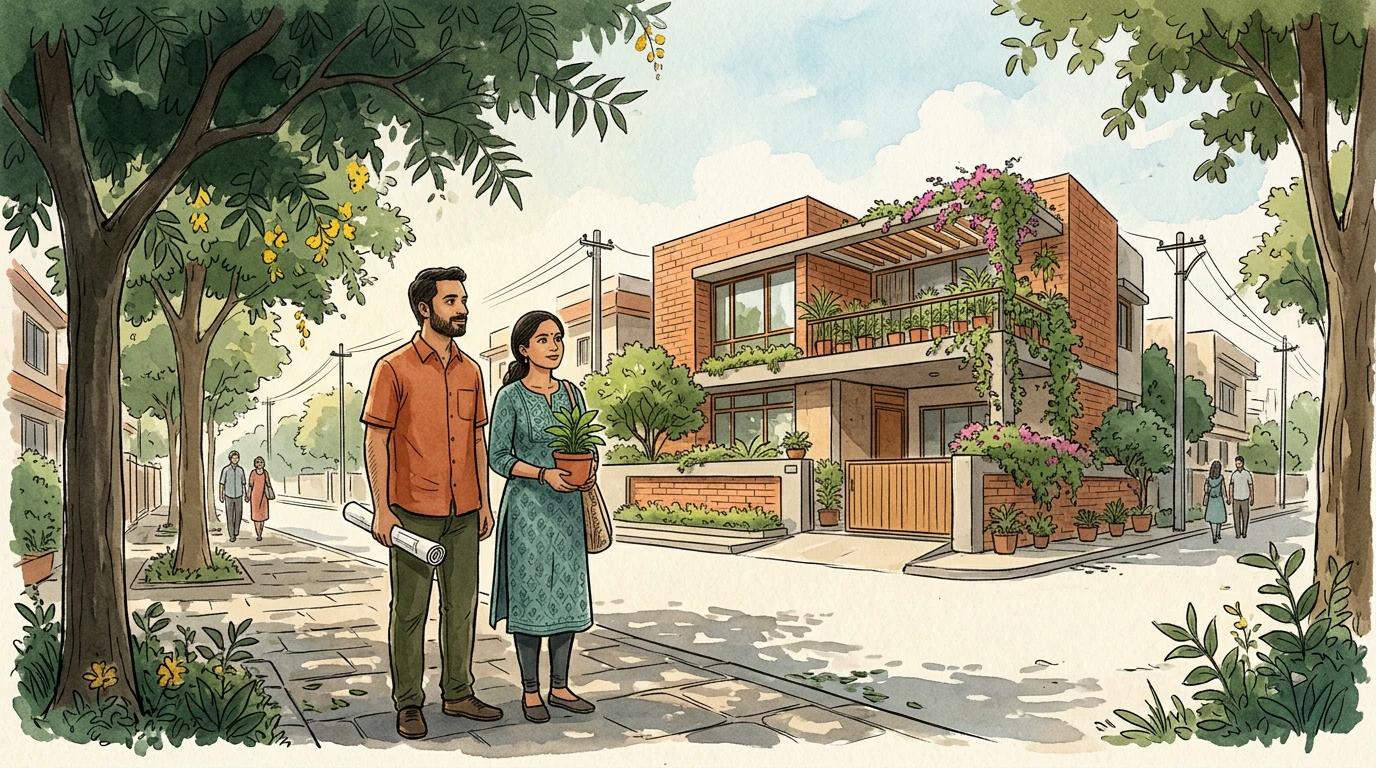
Editorial illustration of an Indian couple planning a home purchase while balancing their financial goals.

The down payment isn’t the only expense when buying a home. Understand the other costs and how to protect your emergency fund and long-term goals.

Rohit Agarwal, Founder of Viraj Wealth
Rohit AgarwalFounder, Viraj Wealth
Read Full Guide
PRACTICAL TOOL

Home Purchase Calculator

Use the Home Purchase Calculator to estimate your down payment, monthly savings and home loan EMI under different assumptions.

ACTIONABLE PREPARATION

The Practical Home Purchase Readiness Checklist

Before signing an agreement of sale or paying a builder token deposit, audit your finances:

Have you budgeted for 8%–12% ancillary costs?

Ensure you have hard cash for stamp duty, registration, interior woodwork, and legal searches on top of the bank's 20% down payment.

Is your emergency reserve fully preserved?

Never use your 6 to 12 month emergency buffer to pay a down payment. A newly mortgaged household needs emergency protection more than ever.

Will total EMIs stay under 35%–40% take-home pay?

Confirm that your combined monthly debt repayments (home loan + car loan) leave comfortable surplus for monthly living expenses and SIPs.

Have you verified RERA and title clearance?

Always engage an independent property lawyer to verify 30-year title deeds, encumbrance certificates, and statutory RERA registration numbers.

Is down payment savings in low-volatility assets?

Confirm that capital needed within 3 years is held in arbitrage or short-duration debt instruments, protecting you from equity drawdowns.

Can your core retirement SIPs continue?

Ensure that taking on the new home loan EMI does not force you to reduce or suspend your long-term retirement compounding plan.

FREQUENTLY ASKED QUESTIONS

Answers to common home purchase and mortgage questions

Beyond the standard 20% down payment required by banks, you must budget an extra 8% to 12% of the property value for non-negotiable ancillary acquisition costs. These include government stamp duty and registration charges (typically 5% to 7% depending on the state), legal search and documentation fees (₹25,000 to ₹50,000), interior woodwork and basic furnishing (typically 4% to 6%), and upfront society maintenance deposits. For an ₹80 Lakh property, expect to need approximately ₹23 to ₹25 Lakhs in liquid cash before loan disbursement.

EXPLORE OTHER MILESTONES

Balance your home purchase with other life goals

Want practical clarity on your home buying plan?

Model your numbers with our calculator or schedule an introductory conversation with Rohit Agarwal (AMFI-Registered Mutual Fund Distributor).