
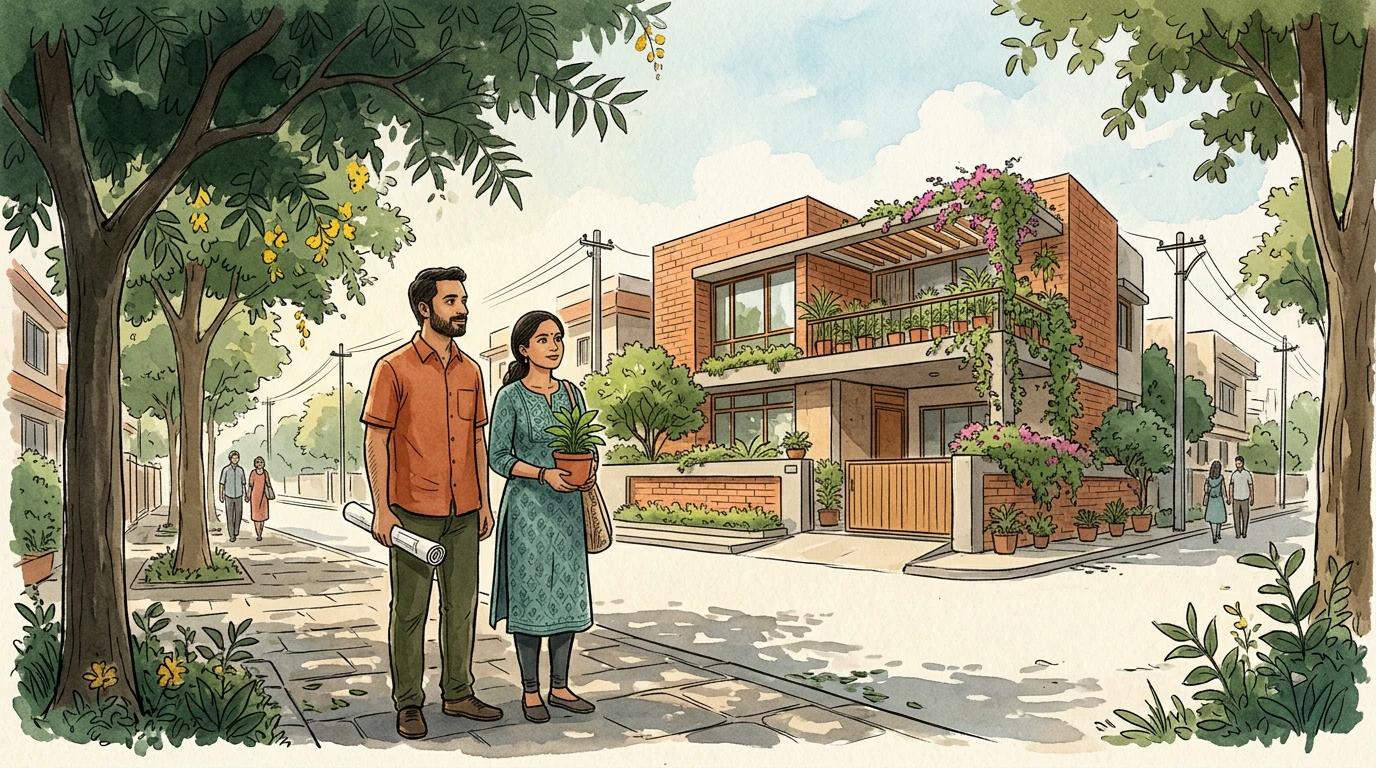
Buying a home costs more than the price you see
You've found a home. The location works, the family likes it and the price seems manageable.
Then the other numbers start showing up.
Stamp duty. Registration. Legal checks. Brokerage. Interiors. Moving costs. And, of course, the home loan EMI.
Suddenly, the amount you need is much larger than the down payment you first had in mind.
This is where many home-buying plans go off track. People prepare for the property price but forget to prepare for everything around it.
Let's break it down.
What does an ₹80 lakh home actually cost upfront?
Assume you're considering a property priced at ₹80 lakh.
For this illustration, let’s use a 20% down payment. This is an assumption, not a universal lender requirement.
• Down payment (20%): ₹16,00,000. • Stamp duty and registration (6%): ₹4,80,000. • Interiors, moving and initial setup: ₹3,50,000. • Estimated cash required: ₹24,30,000.
The home may cost ₹80 lakh, but you could need around ₹24.3 lakh in cash before accounting for every possible expense.
Illustrative figures only. Actual charges depend on the state, property, buyer, lender and level of furnishing. Brokerage, legal fees, taxes and other charges may add to the cost.
What an ₹80 Lakh Home Actually Costs Upfront
Assumed lender equity requirement (varies by bank/profile).
State-dependent statutory duty and legal registration charges.
Essential woodwork, appliances, moving logistics, society deposit.
₹16,00,000 (Down payment) + ₹4,80,000 (Stamp duty & registration) + ₹3,50,000 (Interiors & setup) = ₹24,30,000
The home may cost ₹80 lakh, but you could need around ₹24.3 lakh in cash before accounting for every possible expense.
Illustrative figures only. Actual charges depend on the state, property, buyer, lender and level of furnishing. Brokerage, legal fees, taxes and other charges may add to the cost. A 20% down payment or 6% transaction cost is an assumption, not a universal requirement.
Don't empty your savings to buy the house
Imagine you've saved ₹30 lakh.
You use ₹24.3 lakh for the down payment and other upfront expenses. That leaves just ₹5.7 lakh.
Now consider what happens if: • Someone in the family needs unexpected medical care. • You face a job change or temporary loss of income. • The house needs repairs. • Your child has an education expense coming up.
A home is an asset, but it isn’t an emergency fund. Selling it or borrowing against it isn’t always easy when you need cash quickly.
Before committing, set aside money for emergencies and account for the goals you don’t want to abandon.
Draining 81% of total savings leaves only ₹5.7 lakh to manage moving, emergency living costs, and life goals.
How much home loan EMI can you comfortably afford?
A bank may approve a certain loan amount. That doesn’t automatically mean the EMI fits your household budget.
Start with your monthly take-home income.
Then subtract: • Existing loan EMIs. • Essential household expenses. • Insurance premiums and recurring commitments. • Regular savings for important goals. • A reasonable allowance for unexpected expenses.
What remains is the amount you can consider for a home loan EMI, without stretching the household budget.
Don’t rely on one fixed EMI-to-income percentage. A family with school fees, dependants and other loans may have a very different capacity from a household with fewer commitments.
Also account for maintenance charges, property tax, repairs and insurance after you move in.
Your down payment has a deadline. Invest accordingly.
If you plan to buy a home in three years, the money needed for the down payment has a specific job and a fairly fixed deadline.
A market-linked investment can fall just when you need to make the payment. That could force you to delay the purchase or sell at a loss.
Think about the amount you need, when you’ll need it and how much loss you could tolerate.
For a short-term goal, access to the money and protection from large fluctuations may matter more than chasing a higher return.
There isn’t one investment product that suits every home buyer. Consider the risks, liquidity, costs and tax treatment of any option before using it for your down payment.
What about your other financial goals?
A home purchase can take up a large part of your savings. But it shouldn’t automatically bring every other goal to a halt.
Before committing, check whether you can still: • Maintain an adequate emergency reserve. • Continue essential insurance cover. • Keep retirement savings on track. • Set aside money for your child’s education, if relevant. • Manage existing loans without excessive strain.
You may decide to postpone the purchase, choose a less expensive property or extend the saving period. That’s not failure. It’s better than becoming house-rich but cash-poor.
A simple home-buying checklist
Before paying the booking amount, work through the practical checks to make sure your emergency buffer and other life priorities stay intact.
A Simple Home-Buying Checklist
Before paying the booking amount or signing an agreement to sell, work through these six questions with your family:
Check state-specific duties, registration charges, and developer transfer fees before assuming the down payment is your only upfront expense.
Verify that 6 months of mandatory living expenses plus existing loan EMIs remain protected in liquid instruments.
Calculate net cash flow after deducting regular living costs, school fees, insurance premiums, and ongoing SIPs—not just bank approval limits.
Account for initial interior fit-outs, moving logistics, society maintenance deposits, and recurring property taxes.
Ensure retirement contributions and children’s education timelines do not get completely paused or abandoned for the property.
Obtain an independent legal search report on title deeds, encumbrance certificates, RERA registration, and pre-closure terms.
Decision Guideline: If several answers are uncertain, pause and work through the numbers before committing. Postponing a purchase or opting for a slightly smaller loan leaves your family with far more breathing room than becoming house-rich but cash-poor.
The practical takeaway
The right home isn’t simply the one a bank is willing to finance.
It’s the one you can buy, maintain and live in without putting the rest of your financial life under pressure.
A slightly smaller loan or a longer saving period may leave your family with more room to breathe.

